The Savage Model 99: The Rifle That Changed the Game
Few rifles have carved out a place in American hunting history like the Savage Model 99. It’s actually more important than most realize, and Arthur Savage was smarter than most give him credit.
The Savage 99 wasn’t just another lever-action rifle — it was years ahead of its time.
Innovations That Set the Savage Model 99 Apart
Some of the Savage 99’s groundbreaking features included:
- Rotary Magazine – Allowed pointed bullets, giving the rifle better ballistics and range.
- Round Counter Window – Some early models had a small counter on the receiver, letting shooters see how many rounds remained.
- Hammerless Design – Unlike most lever guns, the Model 99 had an internal hammer, allowing for faster lock time and smoother operation.
- Strong, Solid Receiver – The one-piece receiver added strength and made it easier to mount a scope, which became crucial as optics advanced.
Indeed, the Model 99 was way ahead of its time. So far, in fact, that when Mr. Savage designed it, there was no Internet, computers or CAD; the closest historical event would be World War I several years later. Despite all these facts, the Savage 99 was brilliant then and many still think so today. Of course, a good idea is nice; sales receipts are better, especially when the passion is founded in business.
The Model 99 was wildly popular with well over a million sales. It was the firearm for anyone who wanted a reliable, accurate, repeating rifle. From the backwoods of North America to the great plains of Africa, and from self-defense to military and police activities, the Savage 99 was a tool for anyone. In fact, it still is.
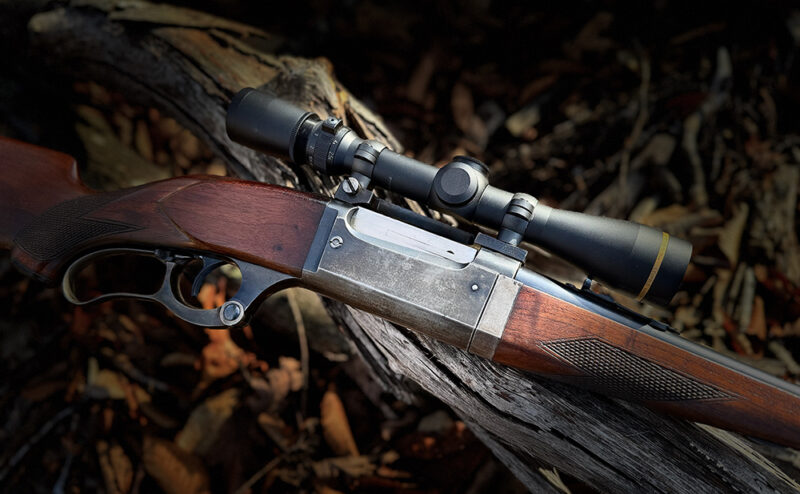
Exhibit A: I am the proud owner of a 1919 Savage Model 99 Takedown chambered in the 250-3000 Savage. This gun is so cool it inspired this article and the entire Lever Gun Chronicles Series. It wears a Leupold VX-III 2.5-8x36mm optic and gets fed Hornady 100-grain Interlocks because it groups them sub-MOA. Again, this rifle was made in 1919.
The Man Behind the Rifle: Arthur Savage
The Savage Model 99 traces its origins back to underrated genius Arthur Savage. He was an inventor and businessman passionate about firearms innovation — and plenty of other things. In fact, his contributions to the firearms industry could accurately be referred to as a mere phase of his engineering life because he did so many diverse things.
Arthur Savage wasn’t just a gun designer — he was a true inventor. Some of his other accomplishments include:
- Railroad Innovations – He designed improved railway coupling mechanisms.
- Agricultural Equipment – He worked on efficient farm tools and irrigation systems.
- Tire Manufacturing – He developed the first successful radial tire and sold the rights to BF Goodrich.
The Evolution of the Savage Model 99
Mr. Savage created Savage Arms in 1894 to develop a more advanced lever-action rifle. He wanted it to compete with the dominant designs of Winchester and Marlin. In fact, it’s fair to say that Savage Arms didn’t build the Model 99, the Model 99 built Savage Arms.
First came the Savage Model 1895. This rifle introduced innovative features like a hammerless design and a rotary magazine that allowed the use of spitzer (pointed) bullets — something tube-fed lever guns couldn’t and still can’t safely accommodate without employing Hornady’s marvelous LEVERevolution bullet.
Introduced in 1899, the Model 99 featured a rotary magazine, which was a radical departure from traditional tubular-fed rifles. This enabled it to safely house, load and fire cartridges with pointed bullets. This made its cartridge selection more powerful and ballistically superior to its tube-fed competition. Mr. Savage didn’t stop there. The Model 99 also had a cocking indicator, an internal hammer for faster lock times and even a round counter window on some models — giving shooters a quick glance at how many rounds they had left. One more thing; technically speaking, the Savage 99 is a controlled-round feed rifle action.
With these advancements, the Model 99 was the epitome of function meets form. It was also one of the first lever-action rifles truly capable of competing with bolt-action rifles, a design rapidly gaining favor among sportsmen and military forces alike during the Model 99’s prime.
The Savage 99’s Popularity and Chamberings
The Savage Model 99 quickly became a favorite among American hunters. It was chambered in various cartridges, including the .250-3000 Savage, the first commercial cartridge to break the 3,000-feet-per -second barrier (with an 87-grain bullet). It also came in the powerful .300 Savage, a rifle that could easily take down everything from deer to moose, and numerous others.
Savage-Developed Cartridges
- .303 Savage
- .250-3000 Savage
- .300 Savage
- .22 Savage Hi-Power
Classic & Common Calibers
- .30-30 Winchester
- .243 Winchester
- .308 Winchester
- .358 Winchester
- .22-250 Remington
- 7mm-08 Remington
Less Common Calibers
- .32-40 Winchester
- .38-55 Winchester
- .284 Winchester
- .375 Winchester
The Rifle That Stood the Test of Time
It didn’t take long for the word to travel across the United States; the Model 99 was a winner for hunters.
One forward-thinking difference maker of the Model 99 was its solid-top receiver. This made it easier to mount scopes — another significant advantage over older lever guns that often required hideous and cumbersome side-mounted optics. This was, and still is, a big deal to hunters who see better and shoot better with an optic.
Long before I found my Model 99, it was a stone-cold, reliable and accurate rifle that accounted for plenty of first and last deer hunts. It was the rifle of choice for many famous hunters, including Jack O’Connor. He praised its capabilities, even though the Model 99 never came chambered in the .270 Win. Veterans returning from war in the early 20th century found the Model 99 practical yet cool.
A Lasting Legacy
Despite its legendary status, time and manufacturing costs eventually caught up with the intricate Savage Model 99. By the late 20th century, bolt-action rifles had become the dominant choice for hunters; Savage shifted its focus to more modern designs. By 1998, after nearly 100 years of production, the Model 99 was discontinued. And despite the firearms industry having the greatest manufacturing and engineering capabilities in human history at its disposal, Savage shows no signs of bringing back one of the finest lever-action rifles ever designed.
Even though it is no longer produced, the Savage Model 99 remains a sought-after rifle among collectors and hunters who appreciate its craftsmanship and history. Vintage models still hold their own in the field, proving that a well-made firearm can last for generations. I fawn over my own Model 99 often and have no qualms about choosing it for big game hunts.
For those lucky enough to own one, the Savage Model 99 isn’t just a gun. It’s a piece of history, a trusted hunting partner and a reminder of a time when lever guns ruled the woods. Maybe they will again one day.
Savage Model 99 Variations
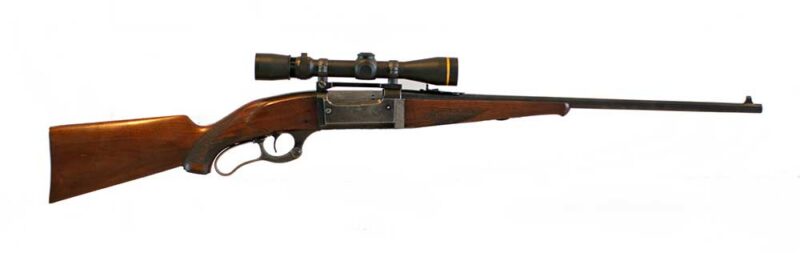
In addition to different cartridges, the Model 99 also came in different models during its tenure. Some of the most notable variations include:
- Model 1895 (Predecessor to the 99)
- Introduced in 1895, this was the first hammerless lever-action rifle.
- Featured a rotary magazine and chambered in .303 Savage.
- Short-lived but laid the foundation for the Model 99.
- Model 1899
- First official version of the Model 99, launched in 1899.
- Still chambered in .303 Savage, later expanded to .250-3000 Savage and other calibers.
- Many early models had the famous cartridge counter window on the receiver.
- Featured high-grade walnut stocks and fine machining.
- Model 99A
- Featured a straight grip stock and carbine-style forearm.
- Chambered in common hunting calibers like .308 Win. and .358 Win.
- Model 99B
- High-grade model featuring a longer barrel (26 inches).
- Some versions included checkered stocks and fancy wood.
- Model 99C
- Introduced in the 1960s, this was one of the first lever guns with a removable box magazine.
- Chambered in calibers like .243 Win., .300 Savage and .308 Win.
- Model 99E
- Designed to be more affordable, it had simpler machining and a plain stock.
- Lacked the cartridge counter window and rotary magazine.
- Model 99F
- A lightweight model with a slender barrel and Schnabel forend.
- Very popular among hunters who wanted a lightweight rifle without sacrificing performance.
- Model 99G
- One of the most ornate variations, featuring engraving and high-grade walnut stocks.
- Model 99R
- Made in the 1940s and 1950s, designed for easier scope mounting.
- Solid-top receiver and checkered stock.
- Model 99PE
- A commemorative model made in limited numbers.
- Featured gold inlays, high-grade walnut and intricate engravings.
- Model 99DL
- Had a Monte Carlo stock, checkering and sling swivels.
- Chambered in modern calibers like .243 Win., .284 Win. and .308 Win.
Related Article: 6 Used Deer Rifles for Hunters
Related Article: Best Straight-Wall Cartridge Rifles for Hunting