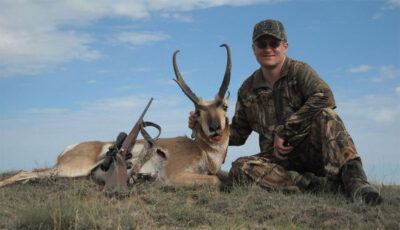
Still Hunting Skills (Going Old School for Success on Deer)
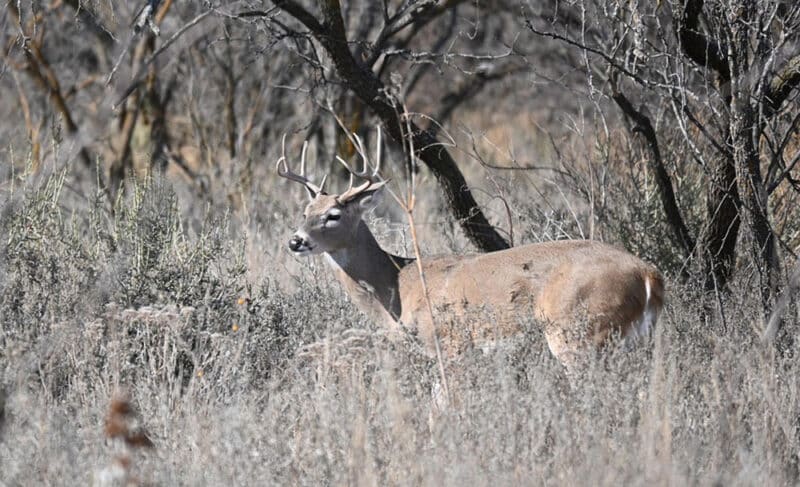
Deer hunting has changed a lot over the years. When I first started deer hunting, very few hunters owned stands or blinds. Instead, we sat on stumps and fallen logs or leaned against trees while waiting for a buck to cross our paths. Sometimes we would sneak around hoping to find one.
Now, hunters climb into state-of-the-art treestands and blinds near where cameras mark deer on a regular basis. Some hunters even use box stands with luxuries, such as heaters, stoves and more. There is, of course, nothing wrong with being comfortable in the deer woods.
It does, however, make me wonder if we have lost some of the old skills, such as tracking, navigation and old-fashioned persistence. You almost never hear about folks slipping through the woods in the age-old activity of still hunting, despite its effectiveness over hundreds, if not thousands, of years.
The Old Days
Like many, I grew up stalking squirrels, rabbits and more with either a 20-gauge shotgun or a .22 rifle; my brother usually had the other. If there was an open season, we were hunting, trying to track and sneak up on all sorts of game on the land around our house. And if a snow shut down schools, we could track with the best of them.
Around that same time, I started still hunting for deer with my dad on a WMA in northeast Mississippi. He had a Remington 742 Woodmaster, while I carried a Remington 1100 with slugs. We didn’t see much back then, either from the lack of deer in the 80s or because I made way too much noise. That completely depends on who you asked.
It took time, but eventually I became pretty good at being quiet. It was also around that time, though, that I got my first climbing stand and joined a hunting club. Over the years, I upgraded stands and safety harnesses, bought more stands and started areas I knew well. It was after I moved for a job with the National Wild Turkey Federation and started hunting the 120,000 acres of the of the Long Cane Ranger District of the Sumter National Forest that I got serious about still hunting again.
I got back into it because hunting new property can be tough, especially if you don’t have time to scout. Online resources and maps really help, but the only way to truly get to know a property is by putting boots on it. So, I found a couple of access points that led into large tracts of forest and headed in with my rifle and gear.
I ended up having a lot of fun and being fairly successful. Several bucks and does ended up in the freezer from my excursions, and I even took a pretty decent eight-point buck. I shot that buck at about 30 yards after about two hours of sneaking into the wind on Sumter National Forest.
Back to Basics
While still hunting is basically walking through the woods, it is not a stroll. It is also not a hike, march or saunter. It is not even a trudge, though I’ve had the slow, heavy steps of exhaustion at the end of a hunt. I would call still hunting a trek, because there is a goal and meaning in the steps. Or maybe it is purpose instead of meaning. It doesn’t matter as long as folks remember two things when still hunting, strategy and location. These can also be called wind and property.
For still hunting, I look for large tracks with as few access points as possible. The more property the better; the fewer people the better. I want to be able to ease through without disturbing other hunters. In areas of pressure, I look for multiple tracts and starting points just in case one or more areas are covered up with other hunters.
To make sure I don’t walk into areas with numerous hunters, I arrive a little later than a typical stand hunt in a specific area. This allows a change in strategy or adjustment to other areas if the first is crowded. I also prefer to still hunt during the week, when there are typically fewer hunters in the woods. While that is not always possible, I do stay away from the heavy weekends, such as the opener and holidays.
Once I’ve determined the area, I head in with enough gear to be comfortable on an all-day hunt. This includes a small backpack containing lunch, snacks, water, first-aid kit, knife, map, compass and GPS unit. I even strap a small stool to the pack for sitting on likely areas when needing a rest. I’ve still hunted with less, much less, but comfort seems to matter more these days.
Going Tactical
Like with all hunting, location matters. However, successful still hunting also requires attentiveness and a whole lot of patience. Still hunting is not just walking through the woods in search of game. It’s moving, slowly, in a way to prevent deer from seeing or hearing the movement, or making them think what they’re hearing belongs.
One of the main tricks to still hunting is trying to sound like other animals. Whether you try to walk like a deer, squirrel, rabbit or raccoon doesn’t matter. The idea is the sound like something that is supposed to be in the woods.
To do this, you had better have some balance and stamina. You can’t be stomping down feet, breaking limbs or shoving pass briars. All this makes noise that doesn’t sound natural. Put feet down slowly and gently, rolling the feet as they go down, stopping when you feel a limb under the leaves.
Finally, hunt the wind, keeping in mind that wind shifts. This is especially true around hills and hollows. Now this doesn’t mean you have to always keep the wind hitting your face, but it shouldn’t be bouncing off the nape of the neck either. Scent spreads as it drifts with the wind, but it also dissipates. Downwind deer might ignore little hints of scent, but they can also change direction. It’s best to not take a chance by hunting into the wind as much as possible.
Still Hunting Sporting Arms
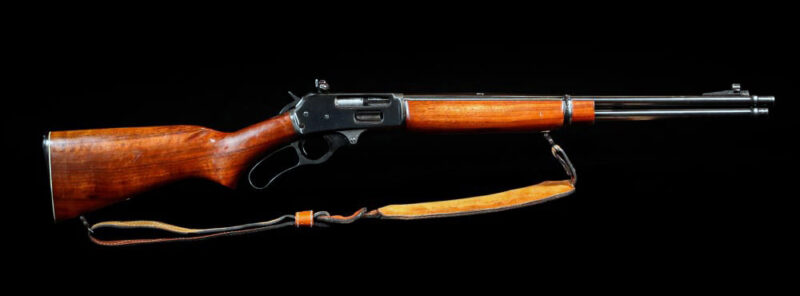
Pretty much any firearm can be used for still hunting. Over the years, I’ve shot deer with quite a few different guns. These include a Remington 700 bolt-action, a DPMS AR-15 and a Savage Model 110. I’ve even shot a deer with a Ruger No. 1. If it is legal, it can be used.
However, I’ve found that lightweight, fast-acting rifles seem to work best. Carrying a long-range bolt-action rifle with a powerful optic gets tiresome after a while, despite that it makes reaching across a field or long hollow easier.
I personally like semi-auto or lever-action rifles fitted with a light, low-powered scope or even a red dot. Most of the shots I’ve had on deer while still hunting were within 50 yards, with the furthest being just under 100 yards away. I’ve had, in fact, more close, fast-action shots than long-range shots while still hunting. What’s more, it is harder to make a fast shot on moving deer with a big scope than it is a 100-yard standing shot with iron sights.
This is one of the reasons why the Marlin 336 in .30-30 is so popular, especially in the South. Semi autos in .30-06 and .308, such as a Remington 742 or a Browning Bar, are also good rifles for still hunting, especially with a red dot or low-powered scope attached.
Still Hunting Skills
While stalking and tracking might not be required to still hunt, they add to both the experience and success. It just doesn’t do much good to slip through an area hunting if there isn’t much deer sign. And that deer sign might be quite subtle, especially if looking for horns.
Deer trails can be easy to find and follow. However, mature bucks don’t typically travel the same paths as does and young bucks. To find these older, and bigger, bucks, hunters need to understand deer behavior and recognize that tracking requires way more than following prints in the mud.
Tracking is following the little signs that everything leaves when passing through an area. These include disturbed leaves, less indented trails, a solitary print in mud. I really pay attention to broken twigs at just under chest level and pushed down grass going off of trails. This is where bucks bypass spots they feel might be a problem.
The last two required still hunting skills are well known but hardest to master. Patience and persistence are also the most important. Still hunters should step slow and random, steady steps make game realize something is around.
Take a step, then wait. A few minutes later, take two steps and wait some more. Always be looking for movement in addition to game. Here is where a pair of binoculars on a strap come in handy. Still hunters need to spend more time looking than moving. And they need to not give up. It might be hours before you find a deer, but you’re likely to get busted the moment you decide screw it and just start walking.