Your First Suppressor Part 2: Caliber Size & Mounting Systems
Once you understand how a suppressor mounts to a firearm, the next challenge is choosing the right one. This is where many first-time buyers get overwhelmed. Caliber ratings, thread pitches, bore size and mounting systems can feel like a foreign language. However, each plays a specific role in how a suppressor performs and what firearms on which it can be used.
Picking the right suppressor is less about finding the quietest option on paper and more about choosing a suppressor that fits your firearms and how you shoot.
Thread Pitch Matters More Than You Think
Thread pitch refers to the pattern cut into the barrel that allows a suppressor or mount to attach. If the thread pitch does not match, the suppressor simply will not fit.
Common thread pitches include 1/2×28 for many 9mm pistols and 5.56 rifles, and 5/8×24 for most .30 caliber rifles. There are others, especially in pistol calibers and European firearms, but these two account for a large percentage of suppressor-ready guns in the U.S.
Thread pitch affects not just attachment, but alignment. A mismatched or poorly machined thread can lead to baffle strikes and suppressor damage. This is why it is critical to verify your barrel threads and ensure any mounts or adapters are designed for that specific pitch.
For first-time buyers, this often means checking every firearm you plan to suppress before choosing a suppressor system.
Caliber Ratings and Bore Size Explained
Every suppressor is rated for specific calibers. This rating defines the maximum bullet diameter and pressure the suppressor can safely handle.
Inside the suppressor is a bore that allows the bullet to pass through. The closer that bore is to the bullet diameter, the more effective the suppressor generally is at reducing sound. A tighter bore captures more expanding gas, which is what actually creates noise.
That said, tighter bores also mean less margin for error. Alignment becomes more critical, especially when using mounts or moving a suppressor between firearms.
Using Larger Suppressors on Smaller Calibers
One of the most common questions from new buyers is whether a single suppressor can be used across multiple calibers. In many cases, the answer is yes.
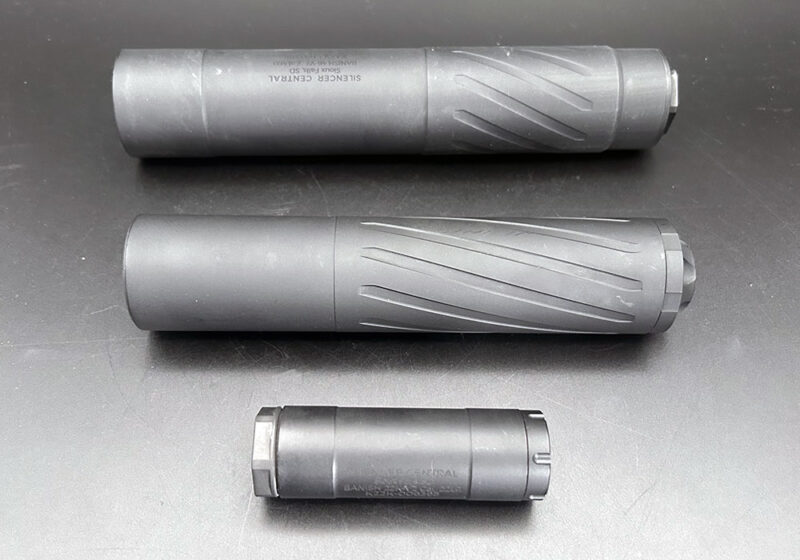
A .45 caliber pistol suppressor can typically be used on 9mm firearms. A .30 caliber rifle suppressor can almost always be used on 5.56 rifles. The larger bore allows the smaller bullet to pass through safely.
The tradeoff is performance. Larger bore suppressors are generally not as quiet on smaller calibers as caliber-specific models. The extra space allows more gas to escape, reducing overall sound suppression.
For many first-time buyers, this tradeoff is worth it. A multi-caliber suppressor offers flexibility and value. This is especially true when paired with the right mounts and adapters. It may not be the quietest option, but it is often the most practical starting point.
Pressure & Rating Still Matter
It is important to understand that caliber is not just about bullet diameter. Pressure and firing schedule matter as well.
For example, while a .30 caliber suppressor may handle 5.56 without issue, it must still be rated for semi-auto or rapid-fire use if that is how you plan to shoot. A suppressor designed for slow bolt-action fire may not be suitable for aggressive use on a gas gun.
Always confirm the manufacturer’s caliber and firing schedule ratings before assuming compatibility.
Understanding Mounts, Brakes, Adapters
Mounting systems are where suppressor choice becomes a system decision rather than a single purchase.
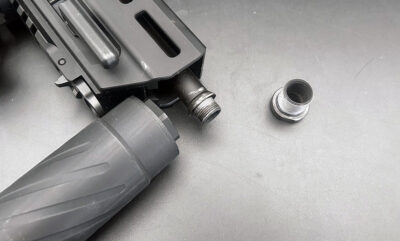
A direct thread suppressor screws directly onto the barrel threads. This is the simplest setup with the fewest parts. It is lighter and usually less expensive. The downside is slower attachment and removal, and the possibility of the suppressor backing off during firing if not properly tightened.
A mount is the interface between the suppressor and the firearm. In many rifle systems, the mount is built into the suppressor and mates with a specific muzzle device on the firearm.
A muzzle brake or flash hider is the device that installs on the barrel. In suppressor-ready systems, this device also serves as the attachment point for the suppressor. When shooting unsuppressed, it functions like a normal brake or flash hider.
A QD or quick-detach system allows the suppressor to be attached and removed quickly, often without tools. These systems lock the suppressor onto the muzzle device using threads, tapers or locking collars. QD systems are popular with shooters who run one suppressor across multiple rifles.
An adapter allows compatibility between different thread pitches or mounting systems. Common examples include thread adapters or suppressor pistons for pistols. While adapters are useful, stacking adapters can increase the risk of misalignment and should be done carefully.
Choosing the Right System for You
For first-time buyers, simplicity is often the best approach. If you plan to suppress one firearm and leave the suppressor installed most of the time, a direct thread may be ideal. If you plan to move a suppressor between multiple firearms, a QD system with dedicated mounts on each gun is usually worth the investment.
Keep in mind that mounting systems add cost. Each additional muzzle device or piston increases the overall investment. When comparing suppressor prices, factor in the cost of mounts and adapters needed to make the suppressor usable across your collection.
Think Long Term
Suppressors are not impulse purchases. They are long-term investments that tend to follow their owners across multiple firearms over time.
Choosing a suppressor with flexible caliber ratings and a well-supported mounting system can save money and frustration down the road. The goal is not to buy the perfect suppressor for one gun today, but a good suppressor that makes sense as your collection grows.
In the next installment, we will cover why weight, materials and usage matter when choosing your first suppressor.