7 Daily Carry Accessories I Won’t Leave Home Without
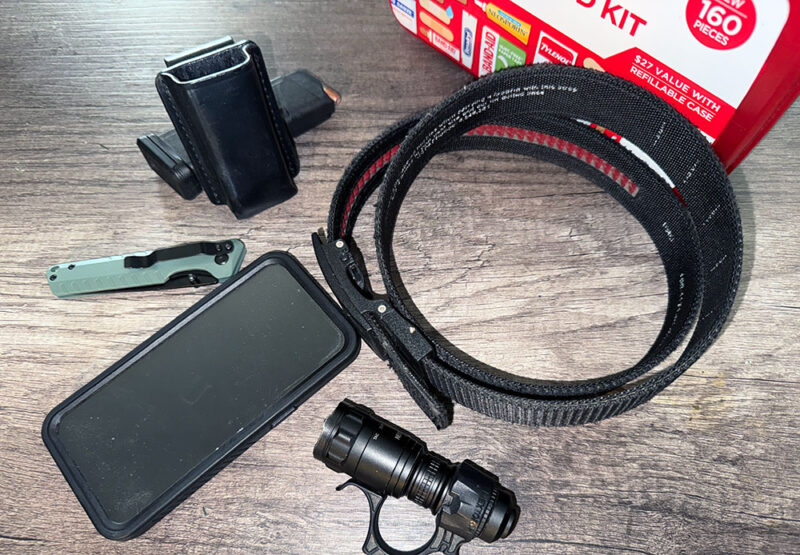
Self-defense and concealed carry is more than just having a gun. The gun is important, but only a part of what it takes to be defensive ready. There are several items that those trying to be sheepdogs need to consider.
Some of these items might seem weird or over the top, but they can make a major difference in a real world situation. Others are well known but overlooked in importance. Finally, there are items that everyone knows is needed but don’t quite give the necessary thought toward.
Being prepared for anything requires daily carry, along with some accessories that can really make a difference if something happens. Sure, these daily carry accessories add both expense and weight but might make the difference for survival.
Something Sharp
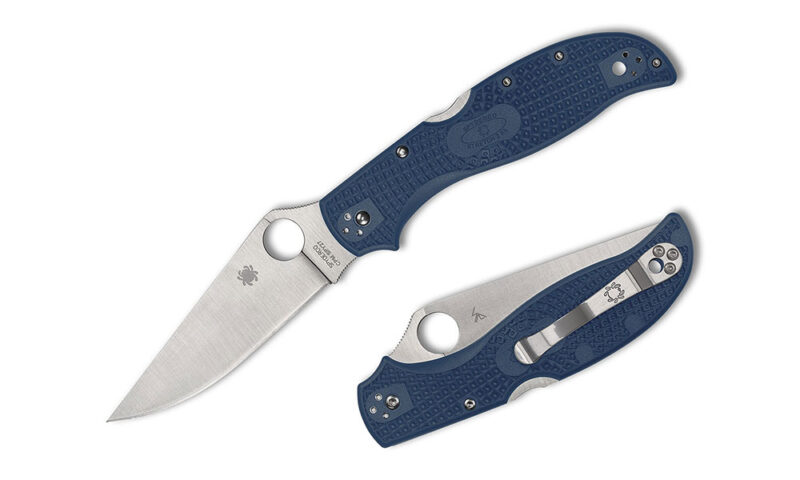
A knife can be used for way more than opening a bag of chips. For many, it is a daily tool. It is actually a pretty good idea to carry a couple of knives for different purposes. One can be for the daily chores, while the other should be something more tactical, such as a one-hand opener or a short fixed blade, that can be used against an attack. Those who don’t want to carry multiple should at least carry something that can also be used in defense.
There are a few brands making one-hand opening folders that I like, with Spyderco being my current favorite. This is mostly because of the large opening circle and the extreme light weight. Buck is another brand I really like; I carried one with a very comfortable G10 handle and drop point blade until I had to ditch it while running through an airport because I didn’t have time to check my bag.
When it comes to fixed blades, I follow the marines to the KA-BAR. I’ve carried one in every vehicle for the past 20 years. There are, however, some other great brands, such as Benchmade, Gerber and Cold Steel.
Round Count
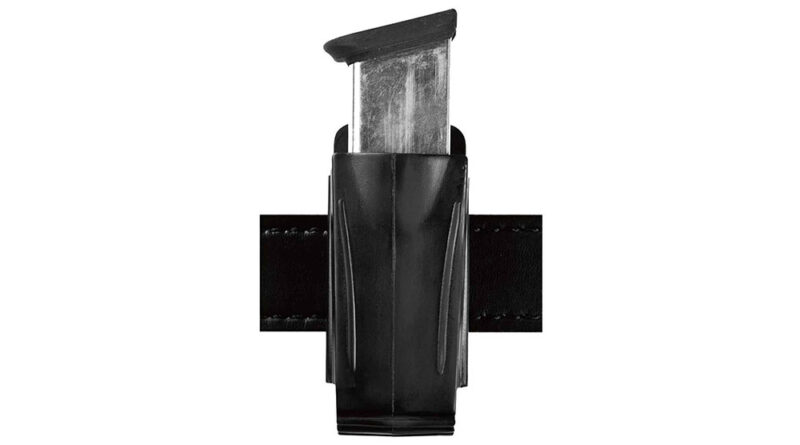
We’ve all heard of the Rule of Threes. However, that rule isn’t a guarantee. Every attack is different and defensive shooters need to be prepared for whatever comes. That’s why most experts recommend carrying at least a full reload of spare ammunition. This can be via speed loaders for a revolver or a magazine for a pistol. Of course, both require some method of carry.
Magazine and speed loader holsters come in all manner of materials and styles, from leather to nylon to Kydex. There are even magazine holsters that can carry a flashlight in addition to spare ammo, as well as minimalistic models designed for IWB carry.
While I have several magazine holsters, I’m currently using a Galco magazine carrier. It attaches a single, double-stack magazine securely to my belt on the weak side. However, I also keep several nylon double magazine holsters for both competition and general use. These usually travel between the house and vehicles.
Illumination
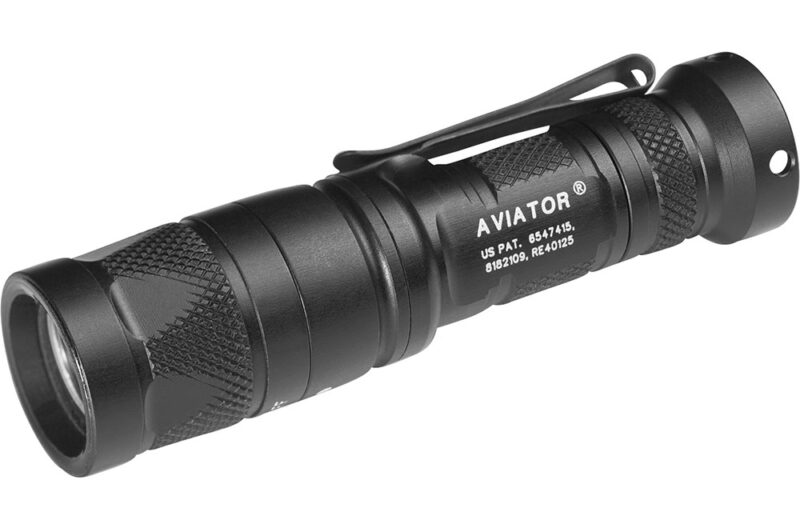
There are quite a few people afraid of the dark. And even those who don’t have that fear are less effective if they can’t see. That’s why every person should always carry a small tactical flashlight, keeping additional flashlights in strategic locations, such as vehicles, nightstands, etc. Flashlights provide illumination in the dark, with tactical models also providing both high-intensity light and strobe for defensive purposes.
I’m currently carrying a NEXTORCH TA21 with FR-1 Tactical Ring; I’ve also used several SureFire models over the years. I like having a very compact light in the pocket with a larger light in the briefcase or backpack. The TA21 is compact and powerful, and the ring provides just a little extra when needed, such as when carrying the pew pew might not be feasible. I also keep a variety of both tactical and inexpensive lights scattered everywhere.
Belt (& Holster)
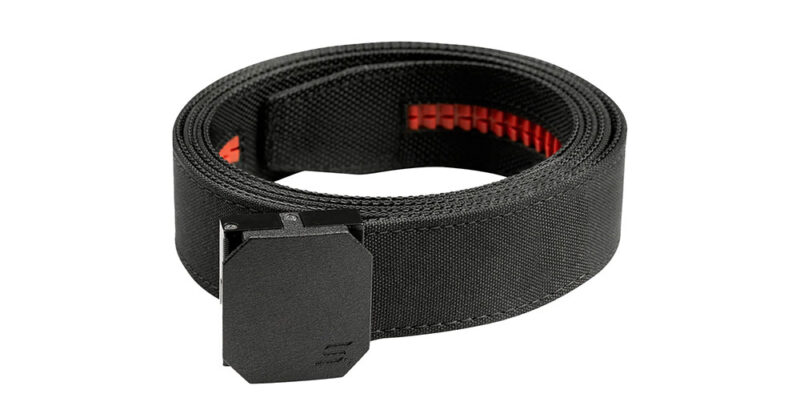
Most consider a belt and holster to be necessities rather than daily carry accessories. However, there is no rule that requires a holster; it is just highly recommended. A good, comfortable holster makes a huge difference in daily carry. If it is not comfortable, folks might not carry or constantly adjust the rig, bringing attention to that location on the body.
It is also smart to have a belt that matches the holster, not in fashion but in quality. Concealed-carry gun belts are made to handle the weight of a gun and daily carry accessories. Many of the these belts allow smaller-adjustments for tightness that standard belts just don’t offer. Strapping a $500 gun in a $100 holster to the body with a $10 belt just doesn’t make sense. It also is not going to work very well.
I’ve long been a fan of Nexbelt, typically keeping a few colors around for various purposes, such as dress and work. There are, however, several other companies that make concealed-carry belts, including ratchet belts. Regarding holsters, I’m currently using a Galco KingTuk Air Cloud, but have carried with countless others over the years, ranging from Alien Gear to CrossBreed, DeSantis and more.
Aiming Aids
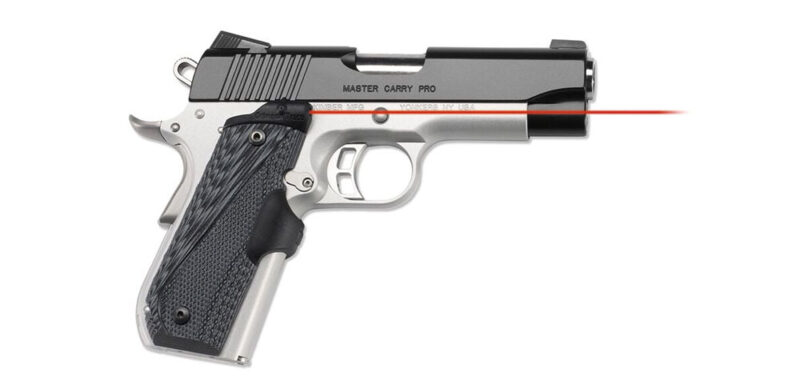
I’m not the fastest accepter of technology. I always used black combat sights until I bought a Beretta 92 with tritium night sights. When lasers came out for guns, I thought they were cool but unnecessary. Then, I tested a Crimson Trace Lasergrip on my Kimber Ultra Carry. I now have lasers on multiple handguns and my AR. Didn’t even really care about red dots on pistols until I tried one out a Springfield Hellcat Pro sporting a Shield SMSc. It made fast shots super easy.
Not everyone consider sights, lasers and red dots to be daily carry accessories, but these are items that can make a difference in an attack. That’s the definition of daily carry accessories; items that could save the life.
Calling All Cars
While most consider it a necessity rather than a daily carry accessory, a phone is an important self-defense item. Not only is it the best way, if not the only way in today’s world, to call for help, it can also be used to collect crucial evidence.
Defensive actions happen fast, and sometimes with witnesses. Some of those witnesses might be friends or acquaintances of the attacker. So, once it is safe, defenders should immediately use their phones to record potential evidence, such as guns, knives, shell casings, etc. Then, call emergency services.
It is to a defender’s benefit to call police after an incident. Police might roll in hot to an incident and see someone with a gun, not knowing the situation. Stay on the phone with the dispatcher, providing details about the situation that can be relayed to responding officers. Be sure to follow the dispatcher’s directions as officers roll in.
Medical (IFAK)
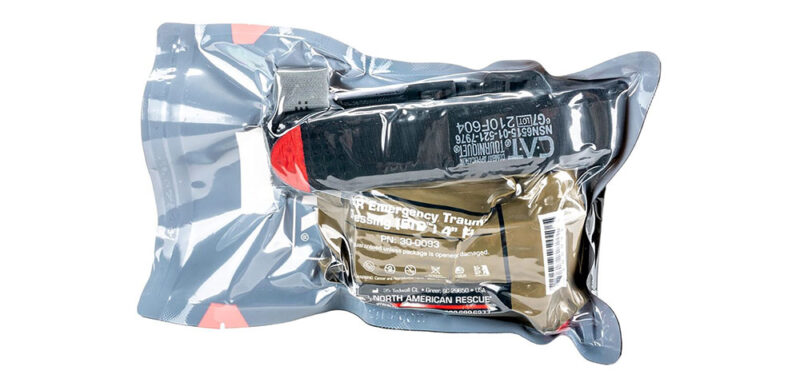
No one wants to be attacked. And they sure don’t want to be injured in an attack. However, it can happen. That’s why folks might want to consider an Individual First Aid Kit (IFAK) as a daily carry accessory, or at least carrying a first aid kit in the vehicle. In fact, it is probably best to have multiple first aid kits in numerous locations.
Quite a few companies produced good first aid kits, including IFAKs. However, it is not hard for defenders to build their own. I’ve actually done both. I’ve even added medical items that could be useful to commercial kits. The hardest to obtain or develop is a small IFAK for on the body. It is easy to carry one in a briefcase or backpack, but those aren’t always an option. Pocket versions that contain more than a few bandages can be difficult to find.
We all have a few daily carry accessories that we treat like an American Express card. However, not everyone has truly thought these items through. The whole point of a carry gun, along with necessary accessories, is to protect life. That’s what makes them so important.




![Features of the New KelTec PR-5.7™ Compact Concealed Carry [Video]](https://content.gunbroker.com/wp-content/uploads/2025/02/Keltec-PR57-featured-400x267.jpg)
![The Transformed LTT PX4 GSD and PX4 Compact [Video]](https://content.gunbroker.com/wp-content/uploads/2025/03/PX4_PX4-COMPACT-1200-X-800-400x267.png)
![Magpul’s Latest Innovations: PMAG® 25 ICAR™ GEN M3™ for 6mm ARC and 338 ARC + MOE QD Bipod for Quick Attach/Detach [Video]](https://content.gunbroker.com/wp-content/uploads/2025/03/Magpul_MOE_QD_M-LOK-4-1200-x-800-400x267.jpg)