9 Takeaways On What to Expect in Your In-Person Concealed Carry Class
Article by Guest Contributor: Concealed Coalition | ConcealedCoalition.com
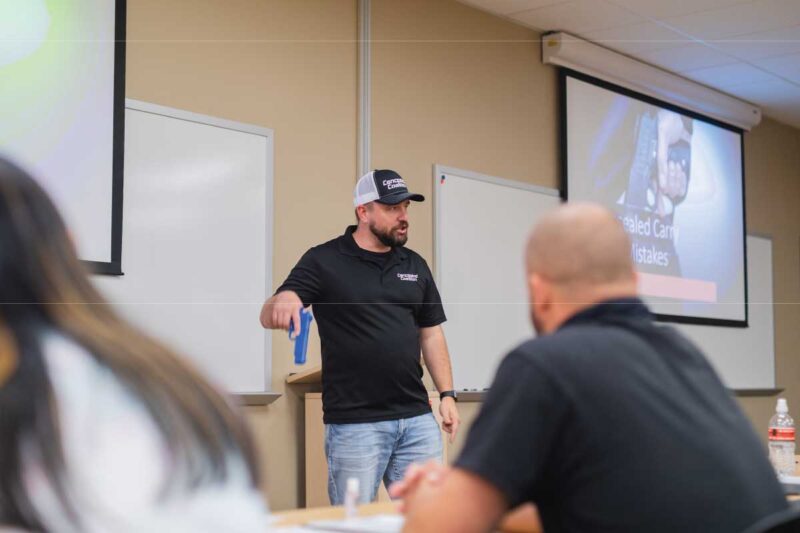
If you’re considering taking a concealed carry class, you might feel a mix of excitement and uncertainty. For some, it’s a first step into the world of firearms and personal protection. For others, it’s a requirement for obtaining a permit in their state. Regardless of your background, an in-person concealed carry class is designed to equip you with the knowledge, skills, and mindset needed to carry responsibly.
Whether you are brand new or an experienced enthusiast checking off a state requirement, understanding what to expect will help you feel prepared and get the most out of your training day.
Preparing for Your Concealed Carry Class: What to Bring
The best way to start your experience on the right foot is with preparation. Classes vary by state and training provider, so review your confirmation email carefully for requirements. Some courses require you to bring your own firearm and ammunition, while others provide them. Common items to have on hand include:
- Government-issued photo ID
- Registration or payment confirmation
- Notebook and pen for taking notes
- Safety gear such as hearing and eye protection (if not provided)
- Water and light snacks if the class runs several hours
Just as important as what you bring is when you arrive. Plan to show up at least 15 minutes prior to the scheduled classroom start time, unless the training company specifies an earlier arrival. This ensures you can check in, find your seat, and settle in without rushing. Arriving early also gives you time to meet the instructor, review any paperwork, and mentally prepare for the day ahead.
What to Wear to a Concealed Carry Class
Dress for practicality, not for fashion. Your clothing should be comfortable and allow free movement since you’ll likely spend time both in a classroom and on a live-fire range. A few guidelines:
- Closed-toe shoes are required for safety. Sneakers or sturdy boots work best.
- Avoid low-cut shirts, which can leave you vulnerable to hot brass during live-fire.
- Wear layers so you’re comfortable in both indoor and outdoor environments.
- Bring or wear a study belt if you’ll be using a holster, as it provides stability and safety.
Think of your outfit as a combination of classroom comfort and range readiness.
Concealed Carry Classroom Training: Safety and Laws
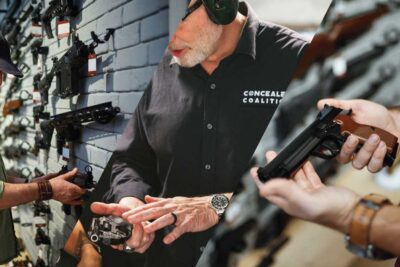
Most concealed carry classes begin in a classroom setting. This portion focuses on theory, safety, and legal knowledge, all critical aspects of responsible carry. You can expect:
- Firearm safety rules: The universal rules of safe handling and why they matter.
- Concealed carry laws: State-specific requirements, use-of-force principles, and where you can and cannot legally carry.
- Safe storage and transport: Best practices for keeping firearms secure at home and in your vehicle.
- Situational awareness: Learning how to spot and avoid potential threats before they escalate.
This part of the course is often lecture-style, but most instructors welcome questions. Take notes, especially when it comes to laws and regulations, since these details are easy to forget and critical to remember.

Concealed Carry Range Training: Drills and Live Fire
After the classroom session, you’ll head to the range (if required by your state and part of the class). This is where you put knowledge into practice under the careful supervision of trained instructors. Expect the following:
- Safety briefing: Instructors will review range commands, proper firearm handling, and rules for safe behavior.
- Basic drills: You’ll practice grip, stance, sight alignment, and trigger control.
- Live-fire exercises: Depending on state requirements, you may be asked to complete a simple accuracy test. These are designed to be achievable for beginners while reinforcing safe, controlled shooting.
Don’t worry if you’re not an expert shooter. These classes are structured to meet you where you are. Instructors will correct mistakes, offer tips, and ensure you leave with more confidence than when you arrived.
Applying Concealed Carry Training to Real-Life Situations
Concealed carry training isn’t just about hitting targets. It’s about preparing for real-world situations. Instructors will emphasize the defensive mindset: recognizing that carrying a firearm is about protection, not intimidation.
What you learn in the classroom, like situational awareness and conflict avoidance, directly applies to daily life. The range exercises, while foundational, are only the beginning of ongoing practice. Think of the class as a starting point, not the end of your training journey.
Tips to Get the Most from Your Concealed Carry Class
To maximize your time in class:
- Ask questions: Don’t hesitate to clarify points, especially regarding state laws or defensive scenarios.
- Take detailed notes: Regulations can be complex; writing them down makes it easier to review later.
- Observe others: Watching fellow students can reveal techniques or mistakes you can learn from.
- Engage with instructors: Many offer follow-up courses or private lessons if you want to advance your skills.
Your attitude matters as much as your preparation. Arrive ready to learn and you’ll leave with far more value.
Common Concealed Carry Class Misconceptions
Many students walk into a concealed carry class with certain assumptions. Let’s clear a few up:
- “You need to be an expert before showing up.” Not true. Classes are designed for all skill levels, including complete beginners.
- “The whole class is about shooting.” In reality, a significant portion covers safety and laws – both equally important.
- “Once I pass, I’m done learning.” A class is just the foundation. Responsible carry requires ongoing training and practice.
What Happens After Your Concealed Carry Class?
Completing your class is only part of the process. Depending on your state, you may need to submit paperwork, fingerprints, or fees to complete your permit application. Make sure you understand these next steps before leaving.
It’s also a good practice to reflect on what you learned and identify areas for continued improvement. Many students schedule additional range time to reinforce new skills while the information is fresh.
Finally, consider leaving a review of your training experience on a platform like Google Business, Sitejabber, or TrustPilot. Honest feedback helps future students choose a quality program, and it supports instructors who are doing excellent work. If your class exceeded expectations, this is a meaningful way to show appreciation.
Concealed Carry Class Recap: Training and Next Steps
An in-person concealed carry class is designed to give you more than just a certificate – it provides the foundation for safe, legal, and confident firearm carry. By arriving prepared, dressing appropriately, engaging in both the classroom and range portions, and continuing your training afterward, you’ll get the most out of the experience.
Whether you’re a novice taking your first steps or a seasoned gun owner fulfilling a requirement, remember this: concealed carry is not just about the right to carry, but about the responsibility to do so wisely. Your class is the first step in that lifelong journey.
Explore concealed carry certification classes, frequently asked questions, and more. Visit Concealed Coalition on GunBroker.com
Start shopping these concealed carry categories for guns, gear, and accessories:
- Shop Concealed Carry & Personal Defense
- Shop Best Concealed Carry Guns
- Shop Pocket Pistols
- Shop Handguns Under $400
- Shop Home Defense
- Shop Gun Safes & Security Products
- Shop Holsters
Related Articles:
- 10 Commandments of Concealed Carry That Every Gun Owner Should Follow
- Best Concealed Carry Gun? Experts Weigh In
- From Retention: Best Concealed-Carry Holsters Guide
- 11 Tips Learned in 25 Years of Daily Carry
- Staying Armed and Cool (Summer Concealed Carry Guide)