Switch it Up with an Afternoon Turkey Hunt
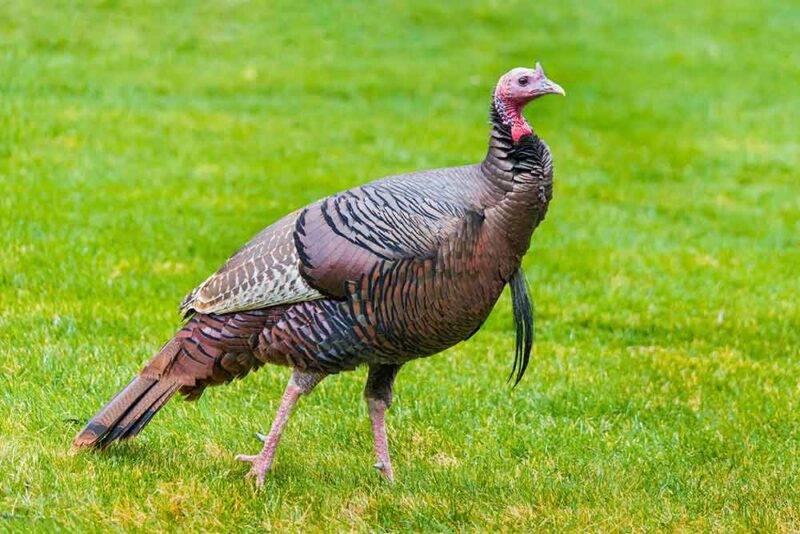
I had spent nine mornings chasing the same bunch of turkeys along a big creek in Sumter National Forest. They would gobble at everything sent at them but refused to get closer than 100 yards.
I had tried coming in from different directions, swapping up calls, adding multiple decoys to the mix and a few other things. Nothing worked. I couldn’t decide if they were smart or lucky, or it I was just screwing up. That’s when a friend at the National Wild Turkey Federation recommended trying the afternoon.
Right after work that same day, I headed back to the creek in gear, slowly walking toward the area I had last worked the birds. The woods were quiet, with no response to locator calls, other than a few songbirds. Every so often, I would lean against a tree and let out a few soft yelps and wait.
When I could just kind of see the top of the hill where I had stood that morning, it was a flat 20 yards across the top, I kicked off a few yelps, real soft. I hadn’t even gotten settled when I heard a whole lot of something coming up the other side of the hill. The sound stopped and three white heads poked up. I hit the head in middle with a load of HEVI-Shot, dropping a super jake. Everything came together on that afternoon turkey hunt. I’ve used what I learned that day to take a few more over the years.
Afternoon Turkey Hunts
Like most turkey hunters, I typically hunt mornings, for many reasons. One of which, of course, is that toms seem to gobble much better in the mornings than in the afternoons. I’ve gotten birds to gobble later in the day, particularly out West, but it is hard to get the back-and-forth excitement of the morning. There are, however, some benefits to an afternoon turkey hunt.
The first is less competition. Lots of hunters head out in the mornings for a few hours before heading to work, school, etc. They seldom head back in the afternoon. You might have the entire area to yourself. So, if you hear a gobbler, you’re probably the only one working him.
This leads to the next benefit, which is if a gobbler does respond, the chance of success is high. Birds don’t gobble a lot in the afternoon. When they do, they are interested. Even if the bird only gobbles once or twice, get set up and ready. He is probably heading your way.
Also, not hearing gobbles doesn’t mean a tom isn’t interested or coming. By the afternoon, most of the hens have left the males for their nests. The boys still want company. They may not be gobbling, but they’re looking and listening for girlfriends. An afternoon turkey hunt is a good time to set up a decoy, get comfortable and call lightly.
Finally, even if nothing comes in loud or quiet, it is easy to turn an afternoon turkey hunt into a roost session for the next morning. As they’re flying up, turkeys get loud, cutting, cackling, yelping and even gobbling. You can even hit a locator call to get, or keep, them going before mark the location for the next day.
Slow it Down with Decoys
Afternoon turkey hunts are different. This means hunters need different tactics. To start, I slow down. I like running and gunning, but there is almost no point later in the day. The birds are on the ground and staying pretty quiet. Running around often just spooks them, particularly in the east. Western birds can be different but are still usually more quiet.
Instead, consider using decoys in likely locations, such as feeding zones and fields. And I’m not talking about a lonely hen. If you’re going to head out with decoys for an afternoon turkey hunt, take multiples, including a jake.
If I’m wanting to move some or unsure of where I want to set up, I typically take two to three hens with a jake. However, my favorite tactic is setting up enough decoys to pretty much be a spread in a field. I’ll put out as many hen decoys as I can carry with a single jake either in the middle or off to the side. I also like having a fan that I can slowly put up and turn as needed.
For calling, I stay real light and simple, kicking out mostly clucks and purrs, with just a few light yelps. I want it to look and sound like a jake is trying to take on a group of feeding hens. Few things irritate a dominate gobbler like a jake trying to horn in on his girls.
Afternoon turkey hunts can be productive. However, you can’t treat that time of day like the morning. Birds are down, moving and wary for movement. Of course, they’re also still wanting to breed. You just have to change tactics with the understanding that the woods might be a whole lot more quiet. They may not be gobbling but the birds are still there.




![Federal Subsonic Ammo: 2026 Caliber Lineup Overview [Video]](https://content.gunbroker.com/wp-content/uploads/2026/02/FEDERAL_SUBSONIC-2-1200-x-800-400x267.jpg)