Investment Guns (More Than Just a Shot in the Dark)
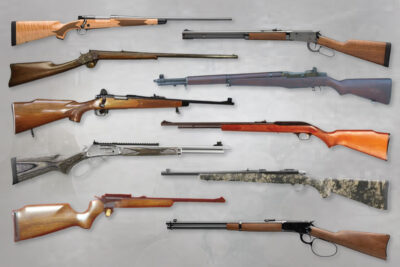
When most folks think about investments, their minds go straight to the stock market, real estate or maybe a whiskey collection that somehow got out of hand. But there’s another niche that’s been quietly gaining ground: firearms. Not just any firearms, mind you, we’re talking about collector-grade, historically significant or limited-run guns that have proven their mettle in the marketplace. These are investment guns.
Buying firearms as an investment isn’t the same as picking up a polymer pistol on sale at your local shop because you liked the way it felt in your hand. This is about understanding rarity, provenance and what the market actually values. The goal isn’t just to fill a safe; it’s to build a portfolio.
Investment Guns That Increase
While not every firearm appreciates, there are clear examples that have stood the test of time and, in some cases, outpaced more traditional investments.
Colt Python (Pre-2005)
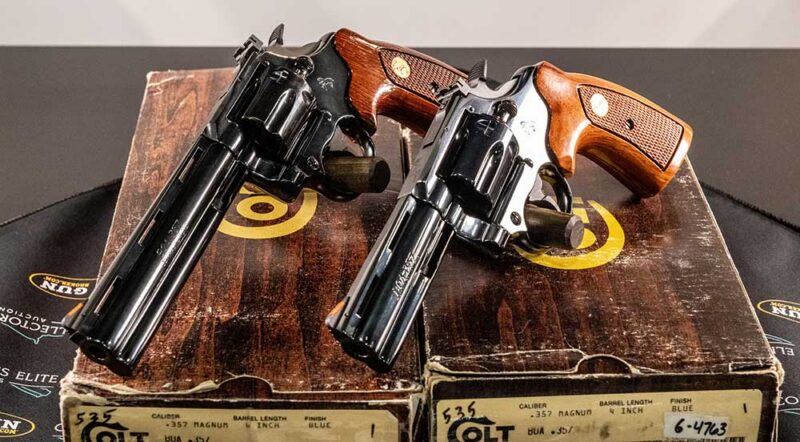
When Colt stopped producing the original Python in 2005, prices on the secondary market surged. Once a $400 revolver, early production Pythons in excellent condition routinely bring in $3,000 to $5,000. Rare variants or unfired models can go well beyond. The snake gun’s reputation for precision, finish and feel has made it the blue-chip stock of the revolver world.
Winchester Model 70 (Pre-1964)
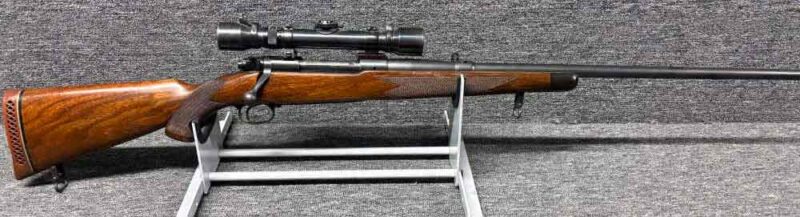
To hunters and collectors alike, the pre-1964 Winchester Model 70 is more than just a bolt-action rifle. It’s a benchmark of American craftsmanship. Serious collectors track down early production runs with specific features, such as claw extractors or certain serial blocks. Prices have remained strong and steady, especially for rare calibers and condition-grade examples.
M1 Garand
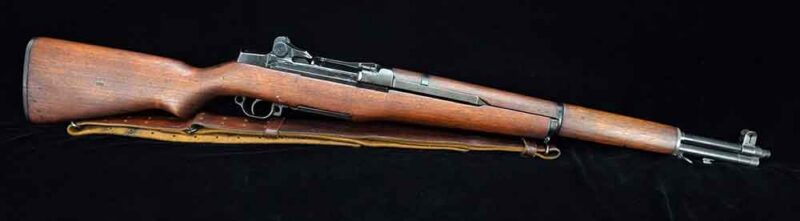
Dubbed “the greatest battle implement ever devised” by General Patton, the M1 Garand has long been a favorite of military history buffs and CMP program participants. Rifles with provenance, like those made at Springfield Armory during WWII, have appreciated nicely. Exceptional condition models can fetch several thousand dollars. Bonus points as an investment gun if you’ve got one with original parts and wartime documentation.
Heckler & Koch P7
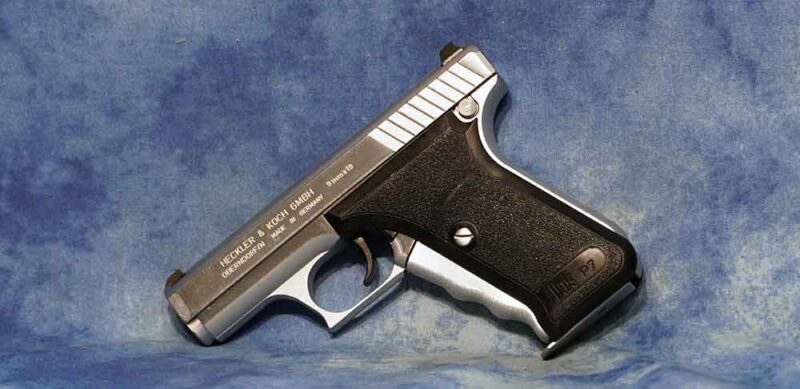
Discontinued in the early 2000s, the H&K P7 has developed a cult following for its unique squeeze-cocking mechanism and Teutonic build quality. Prices for these sleek German pistols have more than doubled in the past decade, particularly for mint examples and rare variants like the P7M13.
What to Watch For
Like any investment, buying firearms for profit isn’t risk free. Market demand can shift, legislation can swing values overnight and condition is everything. A heavily used firearm, no matter how rare, will lose out to a well-preserved version with original box, papers and matching parts.
Those interested in investment guns should also pay attention to trends. For instance, Cold War era imports are heating up, while some modern tactical rifles — despite their popularity — may not hold long term collector appeal unless tied to military use or limited production.
Thoughts on Investment Guns
Treating firearms as part of an investment strategy means doing your homework, buying smart and playing the long game. Think less “what’s hot right now” and more “what will someone be chasing in 20 years.” The goal is to curate a collection that not only makes you smile at the range but brings a return when it’s time to pass it on.
Plus, let’s be honest. It’s a lot more fun to research serial numbers and production codes than it is to stare at a spreadsheet.