5 Handguns That Disappeared You Can Still Own
There are a lot of reasons why a gun doesn’t make it. Sometimes it was because the design just wasn’t that good. Other times it was because of bad marketing or placement. Or maybe it was just not what Americans are wanting at the time. The part that is fascinating is that some of these handguns that disappear made a huge splash in the firearms world, receiving all kinds of press promoting their existence.
This makes the fact that these handguns disappeared even more weird. Not only was quite a bit of money spent promoting these firearms, but a whole lot of people seemed to like and want them. This included gun magazines that ran many on the cover, in addition to features.
Quite a few of these handguns that disappeared came in with a roar and out with a whisper. Others, folks just didn’t like them from the get-go, and the company pulled them because of low sales. However, despite their issues and unfavourability, many are still available as curiosities and collectibles, or even use.
The DoubleTap
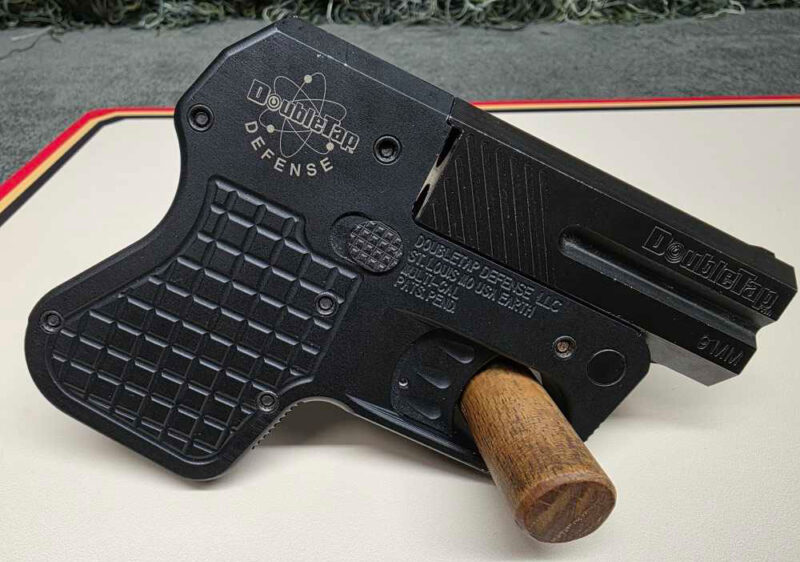
Around 2011, a small company announced an interesting little handgun. The DoubleTap was a hammerless, double-action, double-barreled derringer. Chambered in either 9mm or .45 ACP, this little gun took the industry by storm, with numerous magazines and websites running feature stories and putting it on the cover. It was even featured in the CBS show “Person of Interest.”
A lot of shooters wanted to get their hands on this derringer. However, there were problems. To start, DoubleTap Defense had to swap manufacturers. Then, there was an issue with some early models performing double strikes, the gun would fire both barrels at the same time. Finally, lawsuits, both between the owners and from other companies, put the company and the gun in the grave.
Before that happened, though, approximately 24,000 DoubleTaps shipped out to customers. These handguns that disappeared can still be found for around $400, which is a bit less than the original MSRP. Considering the fuss, the failure and the low number of guns, the DoubleTap could become a collector’s item. At the very least, it is a conversation piece.
Remington R51
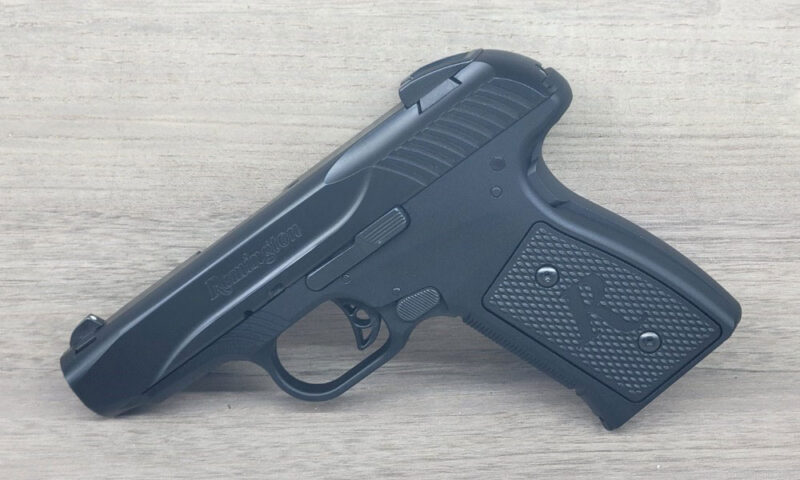
Remington introduced the R51 in 2013. It was based off another Remington handgun called the Model 51. Designed by John Pedersen, it used a hesitation-locked action that significantly reduced recoil. Unfortunately, that was one of its few benefits.
The R51 had problems early on, with the company halting production in 2014. It took two years for the company to sort out problems of failures to feed, failures to extract, failures to eject, magazine drops, sights movement and more. The R51 Gen II came out in 2016, fixing most of the issues. However, Remington didn’t shorten the legs of the magazine follower, which resulted in failures to feed. Owners can distinguish models by the location of the R51 logo, which is closer to the ejector port on Gen II models. Gen II also came with set screws in the sights.
Remington quit producing the R51 when it came out of bankruptcy in 2018. Of course, the company went back into bankruptcy in 2020 before being sold off to a variety of competitors. The R51 will probably never reemerge, as the company is gone and it wasn’t that popular with shooters. It could, however, become a collector’s piece. Remington never published specific numbers but estimates put the total number of pistols produced at under 10,000 units.
Smith & Wesson SW (Sigma)
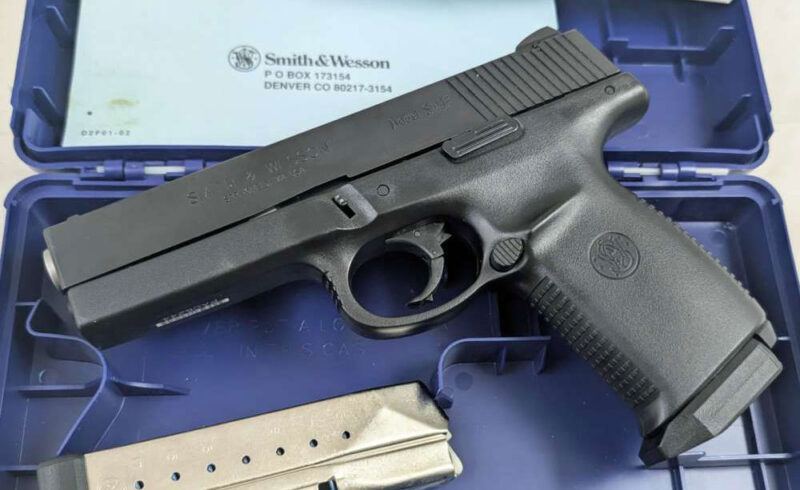
Smith & Wesson has been making quality firearms since 1852. For much of that time it led the industry in innovation. Unfortunately, it got left behind during the “plastic” gun craze of the 80s. S&W didn’t bring out a polymer-frame gun until 1994, which it called the SW series, better known as the Sigma.
The Sigma was designed about the .40 S&W, but it also came in 9mm (later versions included .380 and .357 Sig in smaller numbers) This striker-fired pistol came with a black polymer frame and steel slide. However, there was a problem. It closely resembled a pistol put out by an Austrian company that was protective of its design. That company sued, and S&W had to redesign its pistol.
S&W put out quite a few versions of the Sigma, from full size to compact, as well as a value model designated by a V, along a few different colors. In 1999, the company brought out the VE series, with enhanced features, such as improved grip, trigger and ejector port. Then, in 2010, the Sigma was replaced with the SD series.
The S&W Sigma was not, is not and never will be a collector’s gun. However, it was a decent shooting handgun that can now be picked up used for a pretty decent price. It might also be neat to own the first pistol designed around the .40 S&W caliber.
USFA ZiP 22

Most of us have heard of the so-called “zip guns” used by spies in the movies. However, not all of us have heard of the USFA ZiP pistol. The U.S. Fire Arms Manufacturing Company introduced the ZiP 22 in 2013. It received a lot of praise for its innovative design; this semi-auto rimfire was different and futuristic looking.
Unfortunately, the ZiP also came with questionable ergonomics and mechanical malfunctions. It had lots of problems feeding and ejecting. The poor reliability of this blowback semi-auto made it unpopular with shooters, which eventually led to the demise of USFA in 2017.
Today, models of the ZiP actually cost more than its original price, probably due to its collectability and uniqueness, which can absolutely turn heads at the range.
The Walther PPX & Creed
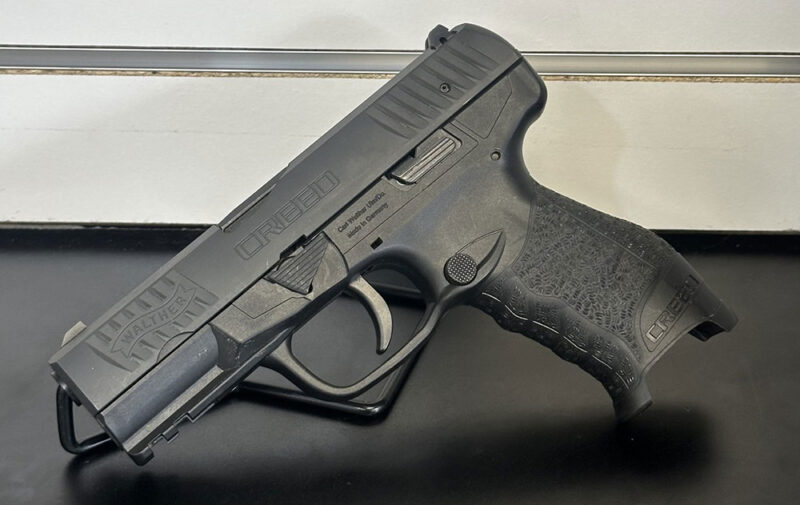
Walther Arms has typically made higher-end guns. However, the company did produce a couple of value models. Neither really did that well in the market. The PPX stood for Police Pistol Xtreme. It came with a patented action that was quite reliable. It also came with Walther ergonomics and a good trigger. However, it came with a tall slide and was blocky in appearance, and it lacked the interchangeable backstraps of other guns.
The Walther Creed was a redesigned PPX, introduced in 2016, with a better trigger, smaller slide and improved design. It looked more like the PPQ, but it still didn’t sell very well. So, in 2019, Walther discontinued both models. Today, these handguns that disappeared can be picked for under $400, with used versions being offered for even better prices.

![SHOT Show 2026 Day 3, Part 2: Black Rain Ordnance, Smith & Wesson & Nighthawk [Video]](https://content.gunbroker.com/wp-content/uploads/2026/01/SHOT-Day-3-2-Featured-400x267.jpg)
![SHOT Show 2026 Day 3, Part 1: Trijicon, Fiocchi, Remington & More [Video]](https://content.gunbroker.com/wp-content/uploads/2026/01/SHOT-Day-3-1-Featured-400x267.jpg)

![SHOT Show 2026 Day 1: First Looks on the Floor [Video]](https://content.gunbroker.com/wp-content/uploads/2026/01/SHOT-Day-1-Featured-400x267.jpg)
![Smith & Wesson M&P Shield Plus (2026): Specs, Features, and What’s New [Video]](https://content.gunbroker.com/wp-content/uploads/2026/04/SMITH_WESSON_SHIELD_PLUS-1200x800-1-400x267.jpg)
![Smith & Wesson M&P FPC 5.7 (2026): Specs, Features, and Folding Carbine Overview [Video]](https://content.gunbroker.com/wp-content/uploads/2026/04/SMITH_WESSON_MP_FPC_57-featured-400x267.jpg)