What the End of the Tax Stamp Means for Suppressor, SBR Buyers
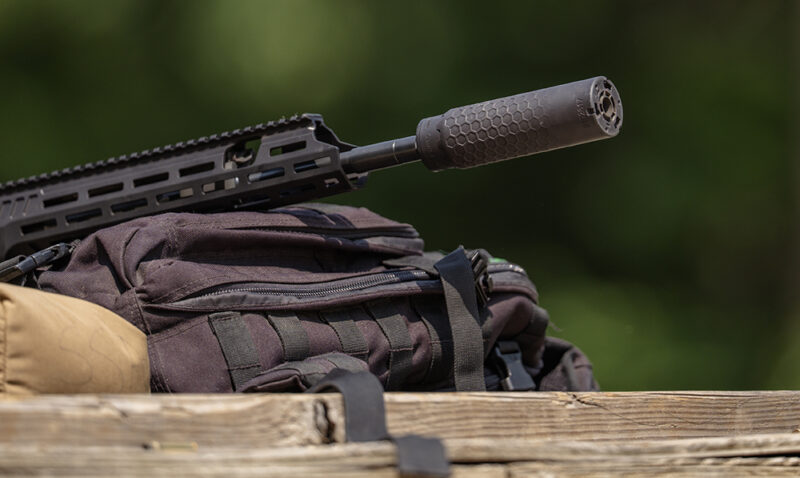
After more than 90 years, the $200 NFA tax stamp that’s stood between law-abiding citizens and items like suppressors, short-barreled rifles (SBRs) and short-barreled shotguns (SBSs) is finally going away.
Thanks to recent legislation informally dubbed “the One Big Beautiful Bill,” the purchase of these items is about to become more accessible to the average firearms owner—but not without some confusion. Here’s what actually changed, what didn’t and what’s still to come.
Win Nearly a Century in the Making
Back in 1934, the National Firearms Act (NFA) introduced a $200 tax on certain firearms in response to Prohibition-era violence. That tax, which originally doubled the cost of items like the Thompson submachine gun, was designed to make these firearms commercially unviable for most Americans. Though $200 doesn’t carry the same weight today, it has remained a major financial and psychological barrier to legal ownership.
Now, that barrier is about to fall. Starting Jan. 1, 2026, the $200 NFA tax stamp requirement for suppressors, SBRs and SBSs will be officially zeroed out. That’s right, no more tax stamp fee to legally purchase those items.
What the Bill Actually Did
The version of the bill originally passed by the House went even further. It removed both the tax and the registration requirement for suppressors and short-barreled firearms. But the Senate, constrained by procedural rules like the Byrd Rule, struck down the registration component, ruling it a policy change rather than a tax matter. The tax reduction, however, passed muster and survived reconciliation.
The result: the tax is gone, but the registration stays—for now.
What This Means for Gun Owners
Let’s be clear. Come Jan. 1, 2026, you can legally buy a suppressor, SBR or SBS without paying the $200 tax. But that doesn’t mean you can walk into a store and walk out with one like you would a sling or flashlight. These items are still classified under the NFA and still require all the NFA registration, including fingerprints and mug shots, as well as a background check and a 4473 form.
So while the cost is going down, the paperwork and wait times aren’t going away just yet.
Why Gun Owners Should Still Be Excited
Some in the gun community have criticized the bill as a partial victory, arguing that registration should have gone away too. But as Bill Sack of the Second Amendment Foundation points out, this isn’t a compromise—it’s an incremental win. It’s the first serious rollback of the NFA since it was passed. It’s a proactive step forward, not a reactive defense.
And there’s more good news. A new lawsuit is being prepared by a coalition including SAF, the NRA, the Firearms Policy Coalition and the American Suppressor Association. The lawsuit argues that without a tax, the registration requirement has no legal justification and is therefore unconstitutional. If successful, it could lead to the complete removal of NFA registration for these items, setting a stronger and more permanent precedent through the courts rather than the whims of politics.
What About Existing Registrations?
That’s still an open question. If registration is ultimately ruled unconstitutional, there may be grounds to challenge the existence of past registration records. Whether that leads to those records being deleted remains to be seen, but SAF says it’s an issue they are actively exploring.
Will Sales Surge?
With the financial burden of the tax gone, it’s likely. Suppressor sales have historically surged in response to reduced wait times and improved e-form processes. Removing the $200 price tag could spark renewed interest from buyers who were previously on the fence.
It could also open the door for new suppressor manufacturers to enter the market, especially as consumer interest grows. Companies with machining capabilities may pivot to this space quickly, creating more options and driving innovation.
Looking Ahead
While there’s still more work to be done—particularly on the registration front—this marks a turning point. For the first time in generations, the NFA is being chipped away in a meaningful way. Gun owners, dealers and manufacturers should take note and prepare for what could be a broader shift in how suppressors and short-barreled firearms are regulated.
The $200 tax stamp may soon be a relic of the past. And if the lawsuits go as hoped, the registry might be next. None of this affects the NFA tax stamp on machine guns.


![SIG NEXT Suppressors: Making Quiet Count [Video]](https://content.gunbroker.com/wp-content/uploads/2025/06/HEXIUM762_HERO_LEFT-copy-400x235.jpg)