Are Suppressors Worth It? (What’s the Big Deal About Cans)
Update: A version of the Hearing Protection Act has passed the House of Representatives. There are, however, still questions about the verbiage, whether it removes suppressors from the NFA or simple removes the $200 Tax Stamp. The American Suppressor Association has come out saying the legislation removes suppressors from the NFA. The Big, Beautiful Bill removed the $200 Tax.
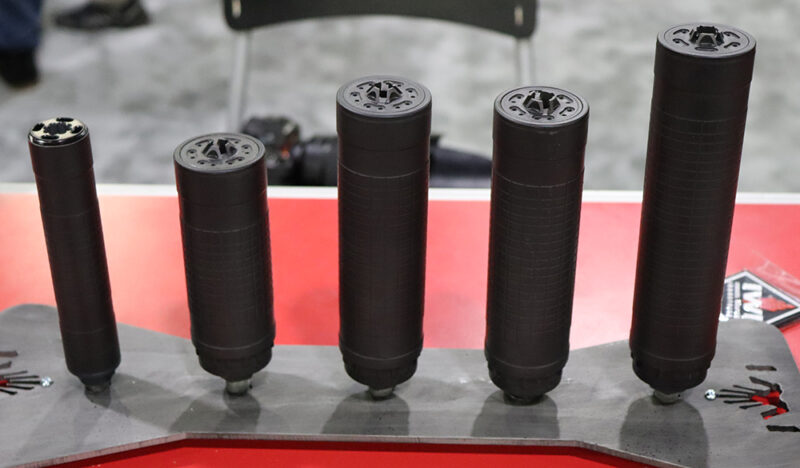
There been a lot of talk recently about suppressors. Are they good? Are they bad? Advocates are working hard to remove suppressors from the National Firearms Act, others want the law left alone or only changed somewhat. Some don’t even understand what the fuss is all about. They have a real questions about these muzzle devices. Basically, they want to know, are suppressors worth it?
So, Are Suppressors Worth It?
There is a lot of misinformation put out about suppressors. Hollywood has produced most of this via the “cough” of suppressed firearms shown in both movies and television. Opponents have pushed the rest.
It’s true that silencers, suppressors, cans, whatever they’re called, reduce noise. It is the whole point of the devices. They also reduce recoil and muzzle flash, which improves accuracy. Newer shooters really benefit from suppressors reducing the flash, blast and recoil of firearms. But suppressors are not silent, or even that quiet.
A round fired from a 9mm handgun produces around 160 decibels (dB). This is about average for most standard handgun rounds, including .45 ACP, .380 ACP and .38 Special. Rifle loads are louder, with most reaching between 165 and 170 decibels.
Two of the more popular rounds — .308 Win. and .223 Rem. — produce between 165 and 170 decibels when fired. In comparison, a jet engine produces 150 decibels from 25 meters away and a flash bang can produce up to 180 decibels. Any sound over 140 decibels damages hearing, instantly. A suppressor reduces sound by about 30 decibels, or just below the level of instant damage to hearing.
Even using subsonic (below the speed of sound) .22 LR ammunition, the lowest a suppressor can reduce sound is to around 110 to 120 decibels. This is the same level as a chainsaw (115 dB) or a thunderclap (120 dB) at a distance.
In fact, prolong exposure to sound levels above 85 decibels damages hearing, which is why shooters use hearing protection at the range, even when using suppressed firearms. The shooters that benefit most from suppressors are hunters and home-defense practitioners.
Every single time a hunter fires at game, his or her hearing is damaged a little more. Firing a gun inside a house in defense of a home is even worse, as the enclosed walls make the sound even louder. It immediately causes tinnitus, disorientation and ear pain. A suppressor helps both situations, but the shot is still quite loud.
History of Suppressors
Hiram Percy Maxim build, and patented, the first suppressor back in 1908. This is the same guy who created the first car muffler, a few years earlier. He created suppressors to make firearms quieter for civilian use. He felt it would reduce hearing damage for shooters and disturbances for those within hearing distance, improving public tolerance for the shooting sports. The fact that his father invented the Maxim machine gun probably helped his incentives.
Originally, shooters purchased suppressors over the counter, or even via mail order. Suppressors were extremely easy to obtain. Then, for a variety of reasons, whether valid or not, Congress passed the 1934 National Firearms Act. The NFA regulated machine guns, short-barreled rifles and shotguns, and suppressors. It didn’t make these items illegal, just harder to obtain and more expensive.
The NFA was revised in 1968 to require all of these items to be registered with the Bureau of Alcohol, Tobacco, and Firearms. It also banned importation of these items for civilian use. Then, in 1986, Congress revised the NFA again to prohibit civilian ownership of new machine guns manufactured after May 19, 1986. The change didn’t affect silencers.
Today, suppressors, silencers or cans are somewhat easier to obtain, partially because of the surge of popularity of these items. Several companies, such as Silencer Central and Silencer Shop, have made the process easier.
The only question is whether the surge in popularity came from the process becoming easier or did it become easier because of the surge in popularity. Either way, suppressor ownership has greatly increase over the last decade. There are currently around 5 million registered suppressors in the U.S. In 2017, there were approximately 1.3 million.
Hearing Protection Act
The Hearing Protection Act was first introduced in 2015. A lot of people had high hopes for this bill, but it never made it out of committee. It got reintroduced in 2017 and combined with the Sportsmen’s Heritage and Recreational Enhancement (SHARE) Act.
The SHARE Act made it out of committee and almost made it to a floor vote, but got shelved before it died. The HPA has actually been introduced into every Congress since—2019, 2021, 2023 and 2025. It died in committee in the first three congresses. The 2025 version is currently working its way through the system.
As written, the HPA would remove suppressors (silencers) from the NFA. This would eliminate the $200 tax stamp, fingerprinting, photo, NICS background check and ATF processing, which can take months. Instead, purchasers would fill out ATF Form 4473, pass the NICS check and walk out the door with the item, just like when buying a firearm.
Are Suppressors Worth it? YES!
Suppressors are a health and safety item. Not only do they protect hearing, they help shooters be more accurate. Suppressors are worth it.
- Hearing Protection—Suppressors reduce the blast of firearms by around 30 decibels to an average of 120 to 130 decibels.
- Reduces Muzzle Flash—Suppressors also reduces the flash at the barrel muzzle.
- Reduces Shooter Flinch—Some shooters, especially new shooters, have issues with the flash and the blast of firearms. Reducing this lowers the potential of flinching when firing.
- Improved Accuracy—Reducing the muzzle flash and blast helps with flinching during the shot, which helps accuracy.
- Reduced Noise Pollution—Not everyone likes hearing gun shots, even at a distance. Suppressors lowers noise pollution, reducing the potential of disturbing others.

![SIG NEXT Suppressors: Making Quiet Count [Video]](https://content.gunbroker.com/wp-content/uploads/2025/06/HEXIUM762_HERO_LEFT-copy-400x235.jpg)